
Texas City City Directory Shelves
Moore Memorial Public Library is the local starting point for a Texas City historical-volume search. Its Local History Archives holds directories alongside yearbooks, newspapers, maps, oral histories, photos, microfilm, and genealogy books. The archive is not a circulating shelf. Original material requires an appointment and staff supervision, and fragile or security-sensitive items can be restricted. Staff may provide a surrogate copy, and cameras are generally allowed when requested. That access rule matters when a search depends on a narrow year or an address detail that cannot be checked from home.
| Collection | Years | Where Held | Access |
|---|---|---|---|
| Local printed volumes | 1938; 1941-42; 1944; 1947; 1949; 1951-52; 1957-58 | Moore Memorial Local History and digital archive | Local archive access; listed years have donation gaps |
| 1940 local volume and telephone material | 1940 specifically discussed; broader telephone material | Moore Memorial Local History | Archive consultation |
| Texas City and La Marque telephone books | 1963-1993, not inclusive | Galveston & Texas History Center reading room | Bound volumes in person |
| Texas City Sun | 1934-2004 | Moore Memorial Local History | Microfilm through the local-history librarian |
The listed local volumes are useful because their dates are exact, not because they form an uninterrupted annual series. Moore says the archive reflects donations, so an absent year should be treated as a gap in the available collection rather than proof that no book was printed. Start with the closest volume, record its date and page, then use the preceding or following available year. Moore's Local History Archives is the custodian for the local shelf, while the library's reference services add census microfilm, scanners, past directories, and yearbooks.
Note: An archive listing can establish a dated address clue, but it cannot prove current occupancy, title, or every member of a household.
Texas City Directory Years and Gaps
The first digital-archive phase makes the local pattern clear: 1938, 1941-42, 1944, 1947, 1949, 1951-52, and 1957-58 are the Texas City runs specifically named by Moore Memorial. The gaps are part of the research result. A family may appear in one surviving year, disappear from the next available volume, and still be documented by a telephone book, a yearbook, a deed, or a newspaper item. Keeping a simple list of found years and missing years prevents a later inference from being presented as a fact.
The Galveston & Texas History Center genealogy collection supplies the later telephone-book bridge and regional context. Its Texas City and La Marque telephone books cover 1963-1993, though the center labels the run as not inclusive. The same reading room has regional directories, newspapers, naturalization leads, and selected church and VFW records. Those holdings can help identify a family connection or a time period, but none is a complete resident list.
The historical center's collection page is shown here as a Texas City city directory research lead.
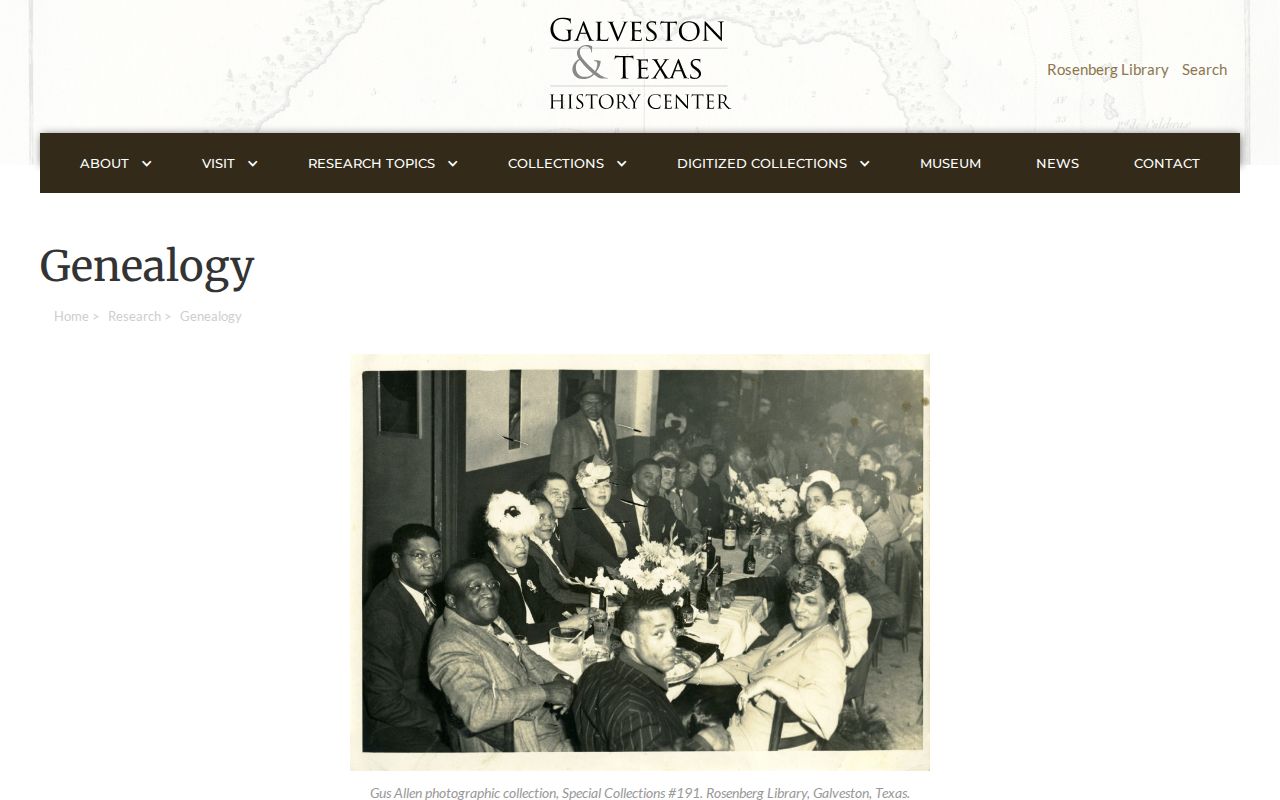
Use the image as a reminder to check the center's stated scope before relying on a telephone-book year, especially where its holdings are described as incomplete.
Moore's April 2023 archive note explains that a directory may carry more than a name and address. Depending on the publisher and year, it can add a telephone number, spouse notation, a business description, children, or a status mark. Those fields vary from volume to volume. The safest practice is to transcribe only what is printed and photograph the page or record its full citation when archive rules allow.
Reading Texas City City Directory Entries
A local entry is a dated index entry, not a modern profile. The entry may be alphabetical, street ordered, or arranged by a telephone subscriber. Read the title page and the abbreviation list before reading the name line. Spelling, initials, nicknames, maiden or married names, and editorial indexing choices can all change the result. Compare the street form as printed instead of silently converting it to a current form, and preserve the annual volume and page with every transcription.
| Person's name | Use the exact spelling, initials, suffix, and any relationship notation printed in the volume. |
|---|---|
| Street address | Shows where mail or a telephone listing associated the person at the publication date. |
| Telephone | May appear in some volumes and can help distinguish similar names. |
| Family notation | A spouse, children, widow notation, or another relationship may appear when the publisher included it. |
| Business detail | A business or work description can be printed, but it is not present in every local volume. |
| Status mark | Some books include a mark about the address; confirm its meaning in that volume's key before interpreting it. |
- Criss-cross directory
- A directory arranged by street and number rather than by a person's name. The research did not confirm a continuous Texas City criss-cross run, so verify the volume before expecting one.
- Householder index
- A name arrangement that usually favors the person listed for the household or telephone connection. It may omit other people at the same address.
- Abbreviation key
- The publisher's explanation of shortened terms and marks, often found near the front of a volume. It should be read before assigning meaning to a line.
A directory result can later be checked against a dated newspaper item or a census schedule. It should not be used to fill in an unprinted relationship, a current address, or a missing household member.
Texas City Telephone Directory Bridge
Digitized material broadens the search without replacing the archive. The UNT Portal to Texas History collections gateway provides searchable Texas material and collection metadata. TSLAC's city-directory guidance also points researchers toward on-site print and microform, licensed databases, and alternate Texas collections. Search the surname alone, then try initials and alternate spellings. If a scan does not yield a clear match, save the collection title and date rather than assuming the person was absent.
The UNT collections interface is shown here as a Texas City city directory digitization route.
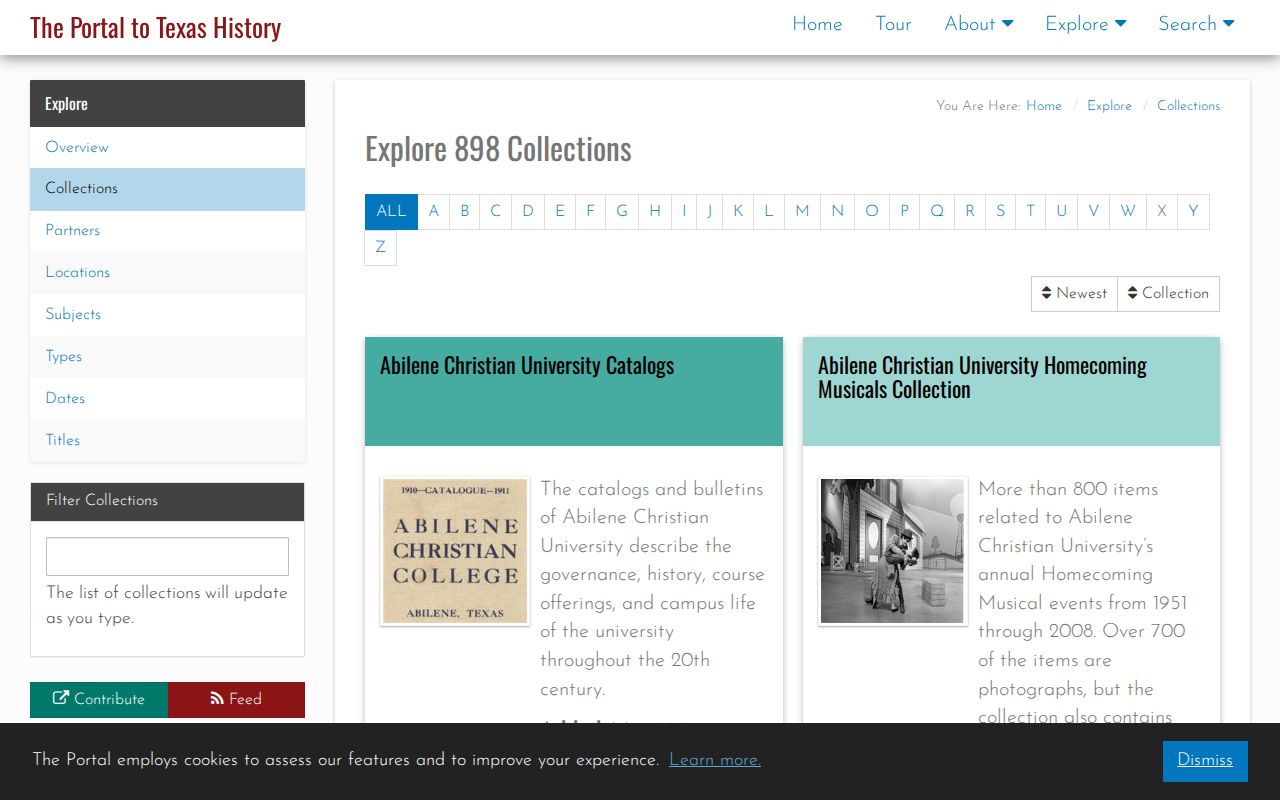
Digital search can identify a useful volume or newspaper date, while the local archive supplies the context, handling rules, and related material needed to assess it.
For a later decade, Rosenberg's 1963-1993 telephone books can bridge the local directory runs. For an earlier period, Moore's digitized Texas City Times, Texas City Daily Times, and camp-era publications may provide a date-specific notice. A digitized source is still a historical document. It records an association at a time, not an exhaustive list of everyone connected to a street.
Texas City Directory Name Variations
A missed name is common in historical directory work. TSLAC specifically warns that spelling, initials, nicknames, middle names, and maiden or married forms can create false negatives. Search the surname by itself first, then try an initial, a known alternate spelling, and the address from a confirmed adjacent year. The street can be the stronger control when two people share a name. Do not combine matches merely because the names look close.
Texas City's early rail, refinery, school, church, port, and military history also means a person can surface in different record families at different times. A newspaper notice or yearbook may establish the date needed to revisit a directory. The local city collection, not an inferred biography, should remain the basis for the final conclusion.
Tracing Families Through Texas City Directories
Use a historical-volume trail to test a household across time, one volume at a time. The 1940 census is a useful date anchor for the available local runs, and later released federal schedules can help connect a directory date to a household snapshot. Census units, street formats, and directory conventions are not identical, so each source should retain its own date and wording.
- Start with the earliest confirmed name or address in a listed Texas City volume and record the year, page, spelling, and street form.
- Check the next available local directory year, rather than assuming an unlisted year exists, and compare address, telephone, and relationship notation.
- Pair the directory date with the nearest available federal census and note any difference in household members or address form.
- Use the 1963-1993 Texas City and La Marque telephone books to extend a later trail where the reading-room holdings support it.
- Check Texas City Sun microfilm for obituary, anniversary, school, or civic notices that may explain a move or a family transition.
For the modern address record, use the Texas City streets reference rather than treating an historical listing as a current parcel record. That keeps the historical household clue separate from today's owner and map data.
Texas City Sun Closes Gaps
Texas City Sun microfilm, listed from 1934 through 2004 at Moore Memorial, is a practical bridge when the directory shelf skips a year. Search for obituaries, marriage and anniversary notices, school references, public meetings, and community announcements. It is not a complete name index, and a missing item does not settle whether someone lived in town. Ask the local-history librarian for the relevant reel and retain the issue date with any finding.
A 2026 TexTreasures award supports a planned second-year project to digitize Texas City Sun microfilm from 1960-1971. That award signals a preservation effort, not proof that all reels are already searchable online. Recheck the archive as work is completed, while continuing to use microfilm and staff assistance for years that remain offline.
Note: Newspaper and directory findings should be dated separately because each source records a different event, publication cycle, and level of detail.
Texas City Archive Digitization
Moore Memorial's local-history program grew from a city library tradition that began with a reading room in 1914 and formal library service in 1928. The archives began in 1958 after the library's 1947 disaster experience, and the current building dates from 1964. That preservation history helps explain why the collection mixes bound books, microfilm, photographs, vertical files, and newer scans rather than offering one seamless database.
For an appointment, original-access rules, or a question about the Texas City Sun and directory holdings, contact the local-history librarian through Moore Memorial. General reference services can also direct researchers to microfilm readers, scanners, and interlibrary loan. Historical collection work rewards a careful record of where each item was held and how it was accessed.